
By M Ghazali Khan
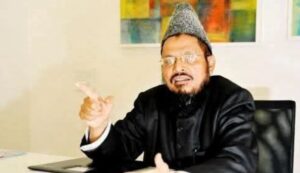
The well-known Islamic scholar Maulana Easa Mansuri has passed away in Britain. Inna lillahi wa inna ilayhi raji‘un (Indeed, we belong to Allah, and to Him we shall return).
The late Maulana was among the most sincere and dedicated Islamic scholars. He came to Britain as an Imam and remained associated with the Tablighi movement until his last breath. Although an active Tablighi, he did not hesitate in expressing his dissatisfaction with the outlook and methodology of Tablighi Jama’at.
His criticism was not confined to the Tablighi Jama’at. He also opposed establishing new and increasingly large madrasas. He would openly argue that Muslims need more colleges and universities than madrasas. He opposed producing successive batches of underqualified religious scholars. In his view, there should perhaps be fewer madrasas, but those that existed should produce graduates who were genuinely knowledgeable and intellectually capable.
Maulana Easa Mansuri was a widely read person and had also authored several books himself. Many of these dealt not with routine religious questions but with the wider challenges confronting the Muslim Ummah.
In 2000, the then BJP Chief Minister of the North Indian state Uttar Pradesh, Ram Prakash Gupta, attempted to replace the UP Hindu Religious Places (Prevention of Misuse) Act 1962 with the UP Religious Places Bill, which proposed legislation that threatened to make even minor alterations or construction work at places of worship and religious sites virtually impossible for minorities without the permission of the Deputy Commissioner.
In response to this act of discrimination, the Indian Muslim Federation (UK) launched a petition campaign. It collected 13,000 signatures from across Britain and submitted the petition to the Indian High Commissioner, Nareshwar Dayal.
The campaign was the brainchild of late Maulana Atiqur Rahman Sambhali. Despite being unwell and physically frail, he travelled far and wide in the UK, visiting mosques and personally collecting signatures to ensure the campaign’s success. Maulana Mansuri also worked alongside Maulana Atiq Sahib throughout the campaign. I happened to accompany them on a visit to several mosques in Leicester. Witnessing their dedication and concern closely was truly humbling.
However, no matter how pious a person may be, no one is entirely free from human weakness. Despite his exceptional sincerity, one of Maulana’s striking qualities—and at the same time one of his greatest weaknesses—was his tendency to be an intensely loyal friend. Once he took a liking to someone, he was prepared to make the greatest sacrifices for them. But if he fell out with someone, he would want nothing more to do with that person.
His impulsive, hasty decisions sometimes proved costly, and I, too, became a victim of this trait, whether one regards it as a virtue or a failing.
Until 2000, the late Maulana greatly admired Zafar Sareshwala. Following a period of intense opposition to Modi in the wake of the anti-Muslim riots in Gujarat, Sareshwala had decided to change his stance. He had persuaded Maulana that the only way to help Indian Muslims was to join hands with Modi.
When I learnt about this development, I telephoned Maulana. I subsequently published a detailed account of our conversation in the Milli Gazette. I reported:
‘Maulana Isa Mansuri is the right hand supporter of Mr Sareshwala. When I contacted him and expressed my concerns, the Maulana shouted back and said, “Community kon hoti hai hamen mashwarah dane wali” (who the hell is the community to advise us). The Maulana insisted that he had gone to see Modi so that he could protect Muslims in Gujarat. Maulana and Sareshwala, the two close friends, are justifying their meeting with the same logic. The Maulana has the reputation of being good at heart but naïve in his views and can be easily influenced by anyone he happens to like. Before their meeting with Modi he had been completely brainwashed by Sareshwala. Mr Sareshwala had even presented before him the humane face of Modi, who, according to him, had rescued Muslim children in a madarsa beseiged by Hindu rioters.’
After the report was published, Maulana was deeply upset with me. He wrote letters to several other senior figures, including Maulana Atiqur Rahman.
When I learnt about this, I telephoned Maulana Atiq Sahib to find out what had happened. He confirmed that he, too, had received a letter but declined to tell me what it said about me.
Apparently deeply angered by my report in the Milli Gazette, Maulana Mansuri also severed his relationship with Maulana Atiq Saheb for not taking his side. However, it was not long before the Maulana realised his mistake.
My friend Munaf Zeena, Chairman of the erstwhile Council of Indian Muslims (UK), learnt about it; he spoke to Maulana on the telephone and arranged a meeting. When we arrived to see him, he said: ‘I do not wish to work with you guys.’
I replied: ‘Maulana, we have not come here to make any such request either. We are aware that misunderstandings have arisen following your meeting with Modi. Our sole purpose in coming to see you is to clear up those misunderstandings.’ We then discussed this, during which we also recorded a brief interview with Maulana.
Following that meeting, my relationship with him was restored. But then he had become very weak and almost housebound. Previously, I would often meet him at meetings and public events. As his health deteriorated, so did his movements, and he rarely went out. We did, however, continue to have lengthy conversations over the telephone.
For quite some time, though, even that contact had ceased. The last time we spoke, as always, Maulana was deeply troubled and concerned about the situation of Muslims in India.
I was deeply saddened to hear the sudden news of his passing today. Alongside his sincerity, he had an element of innocence in his personality. May Allah SWT accept Maulana Mansuri’s services, grant him an exalted place in Jannat al-Firdous, and forgive his shortcomings. Ameen.
A touching reflection on a relationship built on sincerity, mutual respect and forgiveness despite misunderstandings. May Allah SWT forgive Maulana Mansuri, accept his services to the Ummah and grant him the highest مقام in Jannat-ul-Firdous. Ameen.